Guide-dog
Program objectives
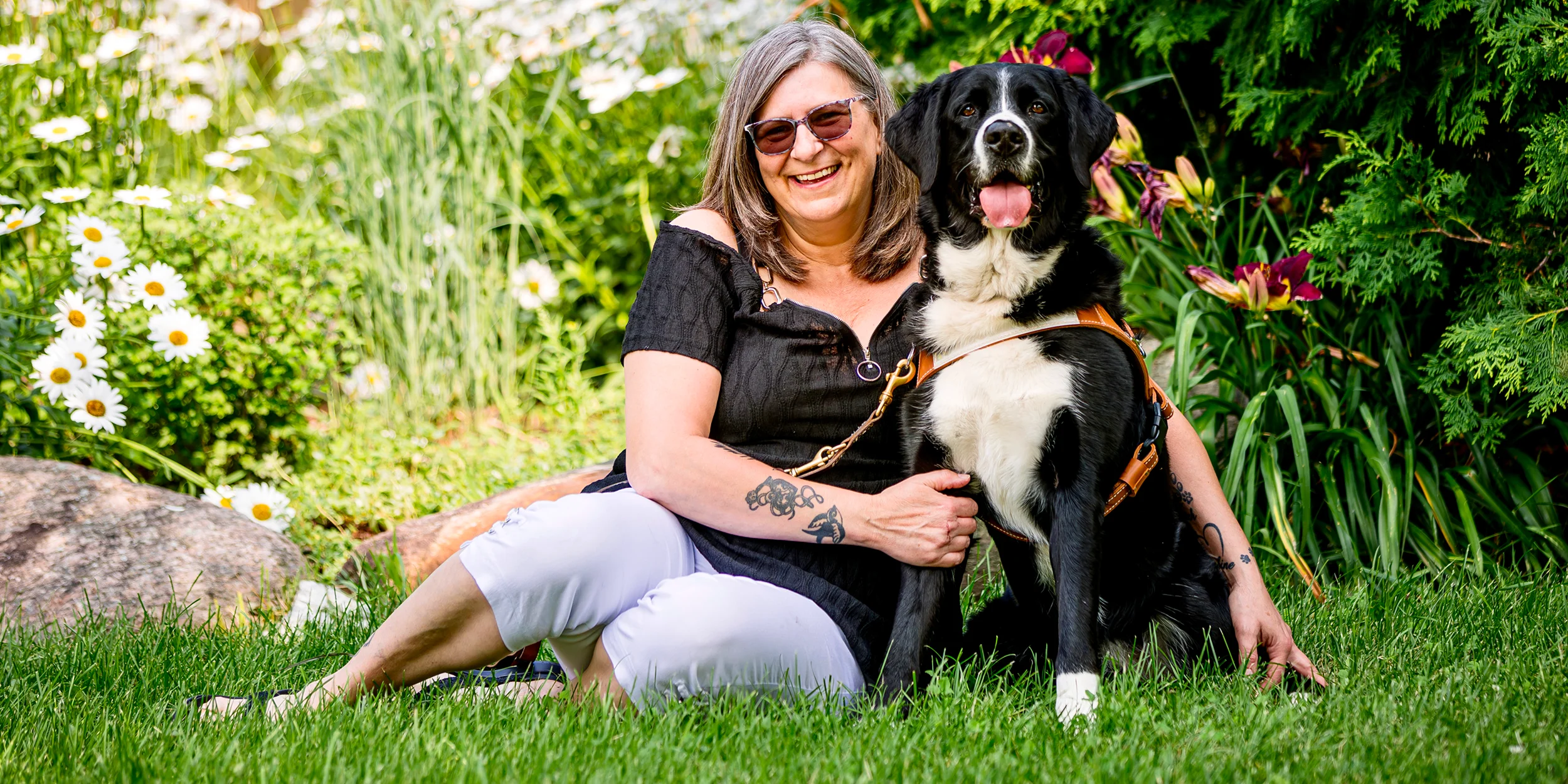
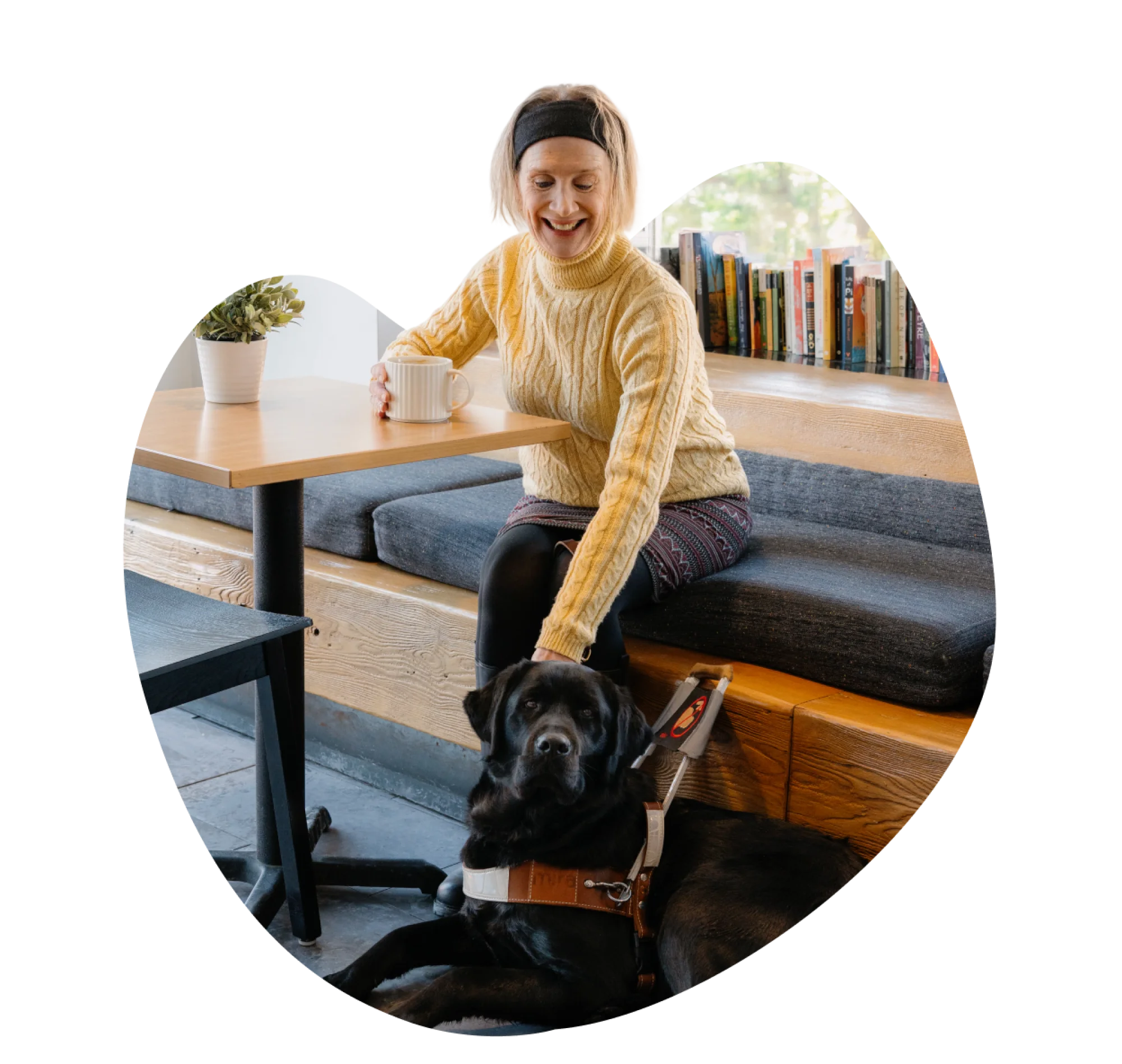
Enable people who are blind or visually impaired to interact, move, and navigate more easily within their environment with the help of a guide-dog.
Create a strong partnership between the beneficiary and the dog in order to form a safe, effective, and comfortable team.
To achieve this, Mira’s pairing program provides hands-on training focused on real-life situations and decision-making.
Eligibility Criteria
To be eligible for the Guide-dog program, applicants must:
Be 11 years of age or older;
Be blind, deafblind, or have low vision or a visual and motor impairment;
Provide the following reports:
Medical report (form to download and have completed by a physician);
Vision report confirming the condition;
Functional assessment describing your orientation and mobility skills, prepared by an Orientation and Mobility Specialist (OMS).
If hearing issues are present, an audiogram must be provided;
Be able to participate in three (3) or four (4) weeks of training at Mira, five days per week (8:30 a.m. to 4:30 p.m.), in addition to Saturday mornings;
Be able to maintain sustained attention throughout the training period in order to memorize all routes, commands, and exercises;
Not have allergies that would interfere with working with a dog;
Be able to assume the responsibilities related to caring for the dog (veterinary expenses, maintenance costs, daily physical activity, etc.)*;
Be able to interact positively with dogs;
To be in stable physical and mental health;
To be able to travel independently;
To live in an environment suitable for the use of a guide dog.
*A government subsidy is available for individuals receiving a guide-dog.
Program process
The process begins with the submission of an application accompanied by the required reports (medical, visual, OMS).
Mira’s clinical team reviews each application to determine whether the guide-dog program adequately meets the applicant’s needs.
Eligible applicants are invited to a 24-48 hour evaluation at Mira. This step allows us to assess mobility, orientation, and interaction with the dog.
The clinical committee, composed of specialized professionals, reviews the evaluation results and confirms eligibility for the program.
Once accepted, the applicant will be invited to attend a 3-4 week class at Mira. This stage is supervised by a multidisciplinary team: instructors, orientation and mobility specialists, and a Mira social counselor.
Mira provides free accommodation and meals for beneficiaries throughout the duration of their stay.
Note: Mira does not offer pre-pairing or at-home placements.
Once the pairing class is completed, an instructor will visit the beneficiary’s home in the following days to ensure a safe and smooth integration of the team into their daily environment.
Regular follow-ups are conducted to ensure the dog’s well-being and the team’s proper functioning. Occasional visits may also take place during changes in the environment, such as a move, returning to work, or starting school.
The retirement age of a guide-dog varies, but it typically occurs around 10 years old, depending on several factors. Mira provides support during this stage.
Generally, the dog is first offered to a member of the beneficiary’s close circle. If that is not possible, it is offered to its original foster family, and as a last resort, to a new loving family from the general public.
If the beneficiary’s needs continue, a new evaluation is conducted to determine eligibility for a subsequent pairing.
Commitments and responsibilities of the beneficiary
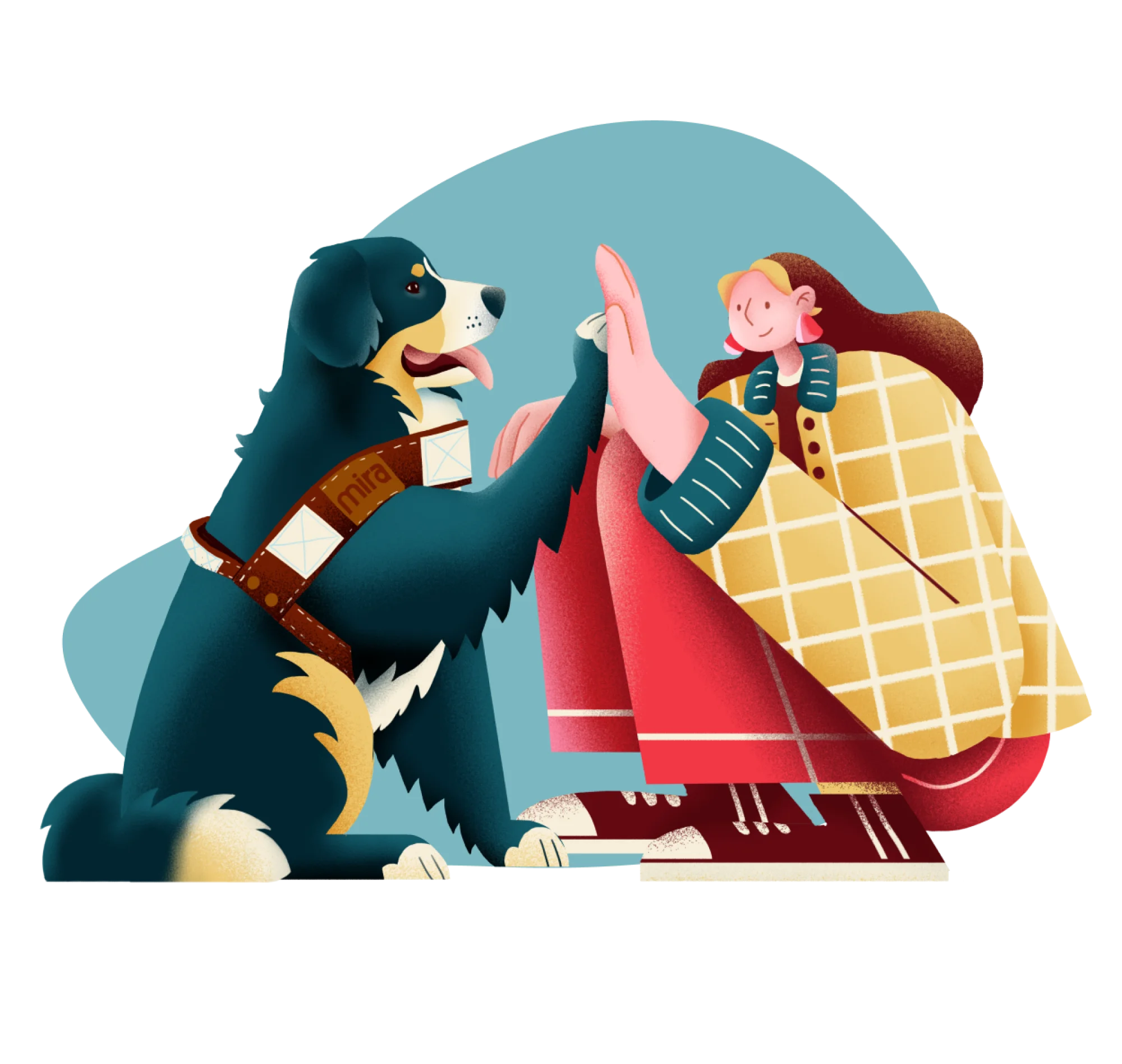
Adopting a guide-dog means committing to care for it with respect and consistency.
This includes:
Annual veterinary care and keeping its vaccination record up to date;
A balanced diet and adequate rest;
Compliance with Mira’s annual follow-ups;
Playtime and physical exercise, essential for the dog’s well-being.
Our multidisciplinary team of qualified professionals
Behind every successful team is a dedicated staff that ensures the program’s success and the well-being of each human–dog pair.
Instructor: Trains the dogs and ensures the pairing with the beneficiary, and develops the duo's skills.
Social Counselor: Typically trained in psychoeducation, the social counselor accompanies beneficiaries throughout the process, supporting emotional and relational adaptation with the dog.
Orientation and Mobility Specialist (OMS): Prepares and guides future guide-dog beneficiaries during evaluations and pairing classes, teaching essential strategies and techniques for safe and independent mobility in various environments. They also act as a resource for both beneficiaries and their OMS specialists in the community, collaborating closely with instructors to ensure the team’s comfort, safety, and efficiency.
Clinical Advisor: Supports social counselors and instructors by helping analyze sensitive situations and make careful decisions regarding the well-being of human–dog teams. They provide a clinical perspective to promote ethical interventions and ensure the quality and fairness of the guide and assistance dog programs.
Partner of the Nazareth and Louis-Braille Institute
Since its inception, Mira has maintained a special relationship with the Nazareth and Louis‑Braille Institute (INLB).
Our shared history began at Mira’s founding: following a request from an orientation and mobility specialist at INLB, Éric St‑Pierre trained the very first French-speaking guide dog adapted to the Quebec context, laying the foundation for what would become Mira.
Since that pivotal moment, INLB and Mira have worked closely together to support the independence of people who are blind or visually impaired. This lasting partnership remains at the heart of our mission: to provide every person living with visual impairment with comprehensive, human-centered, and deeply transformative support.
Apply now
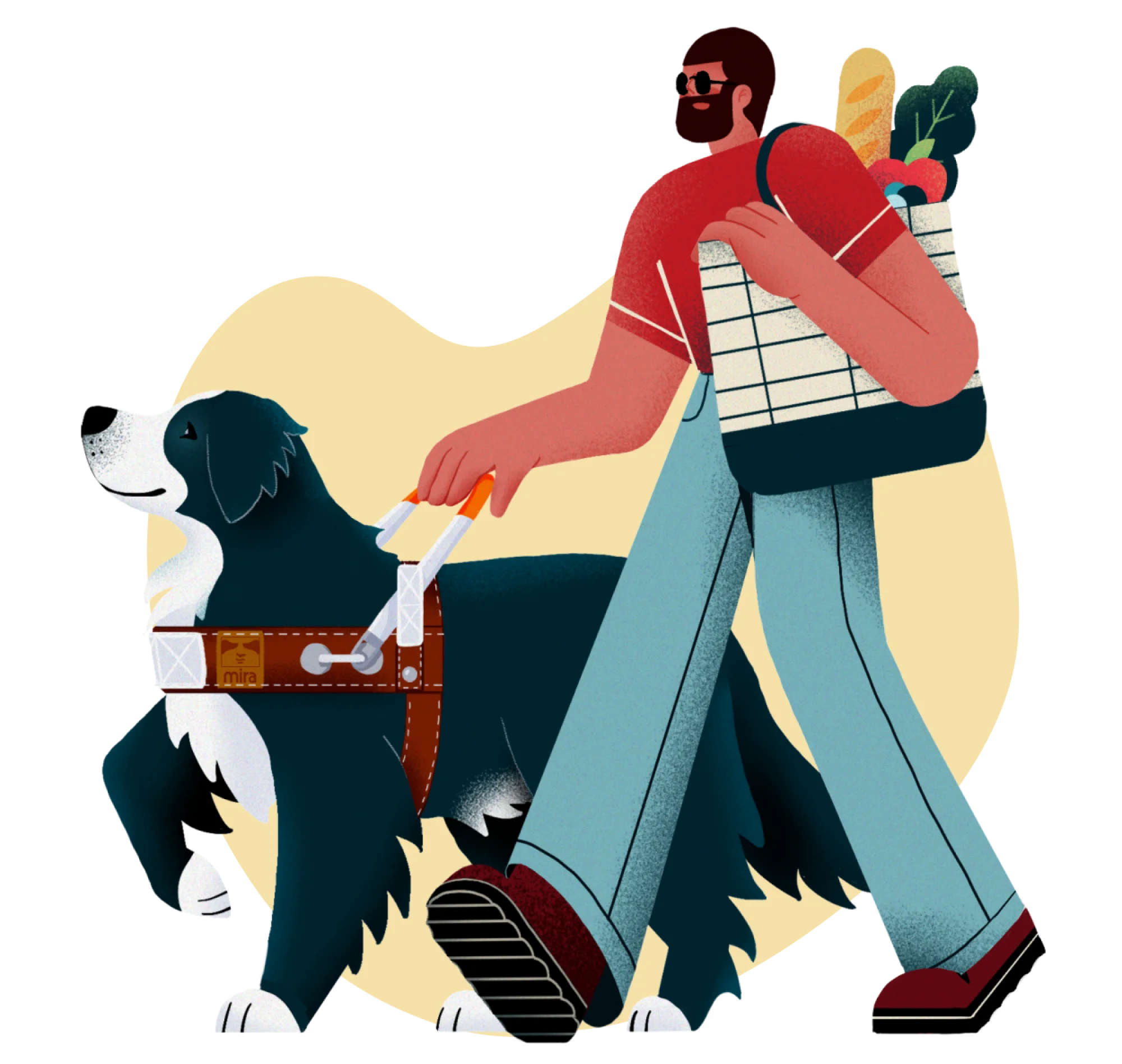
Would you like to receive a guide-dog? If you believe you meet the eligibility criteria outlined above, we invite you to complete the application form and attach the required reports (medical, visual, and OMS).
Due to a high volume of applications, Mira is currently accepting new admissions from Canadian residents only. International beneficiaries already paired with a Mira dog remain eligible for a renewal.
Representative of the beneficiaries
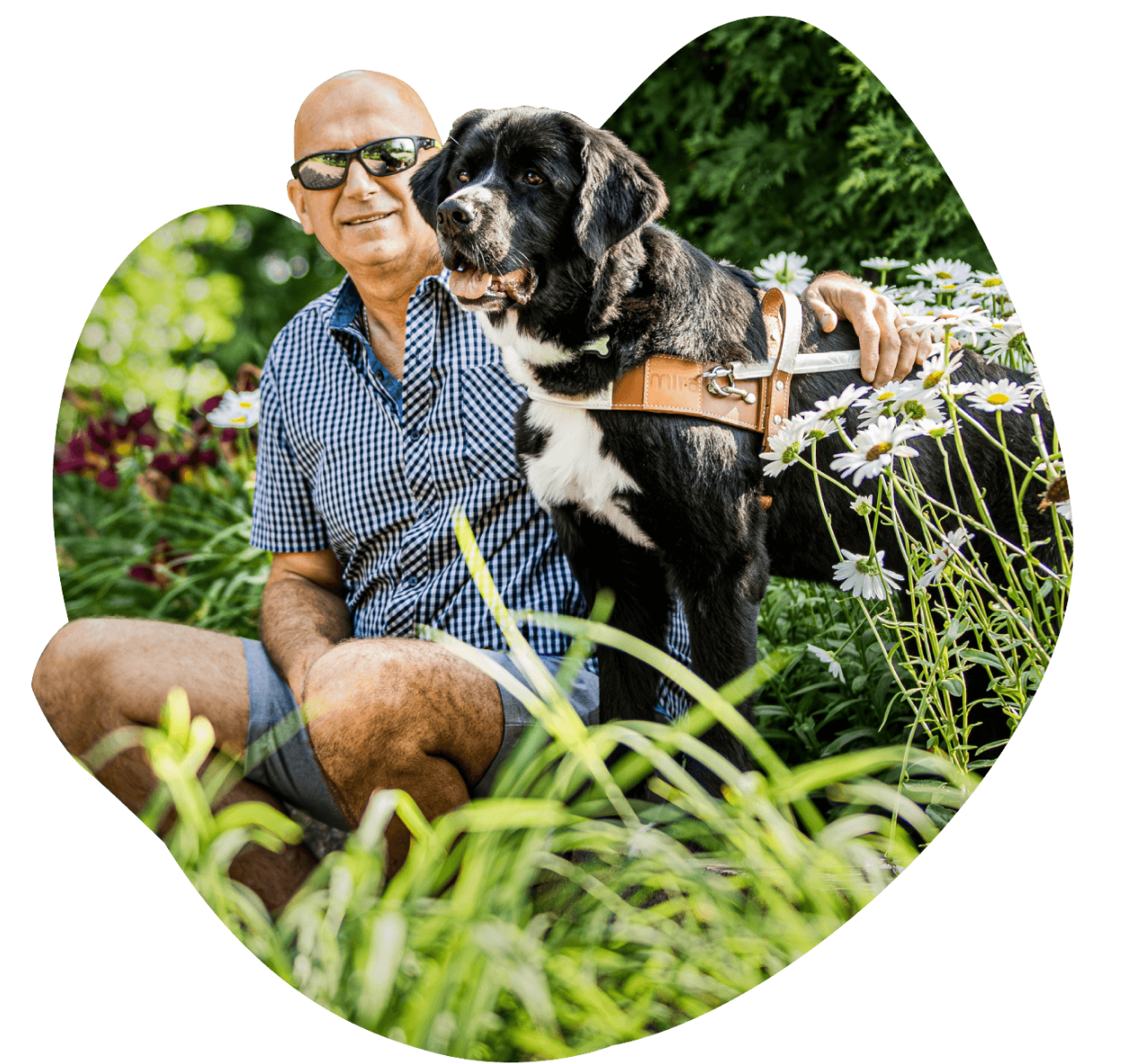
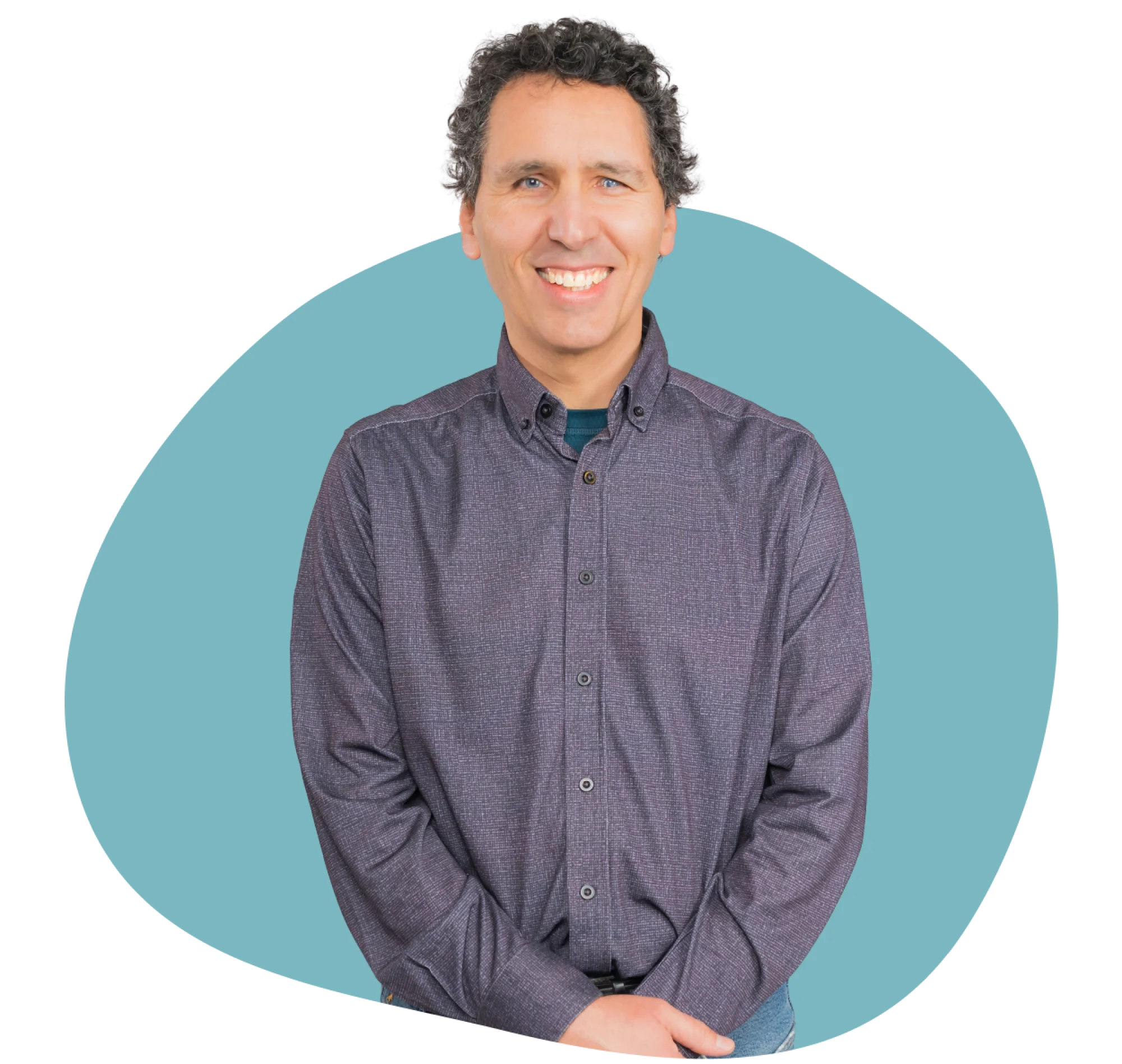
As a representative of guide-dog beneficiaries, Frédéric acts as a spokesperson for users with Mira. He is available to answer questions, hear concerns, and receive complaints, ensuring he fully understands each situation and provides appropriate support. He then communicates this information to the Beneficiaries’ Committee, which brings it to the Board of Directors so that users’ voices are heard and contribute to the continuous improvement of services.
"Helping guide-dog beneficiaries have the best possible experience, and showing new beneficiaries the daily joy and benefits of using a guide dog—these are the goals that motivate me to be involved with Mira’s Beneficiaries’ Committee."
- Frédéric Gauthier
Guide-dog program beneficiary
Testimony