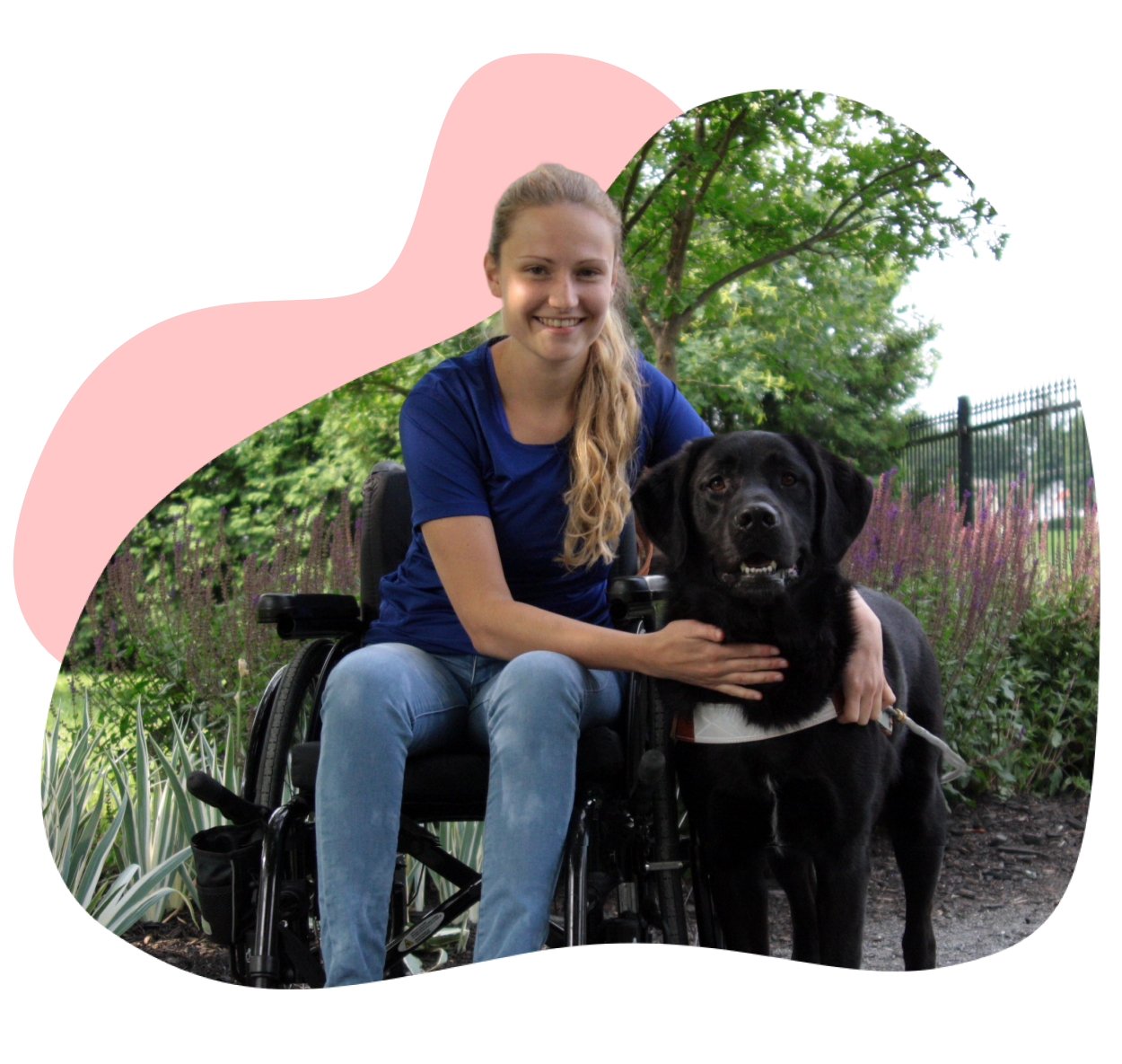
Mobility Service Dog
Program objectives
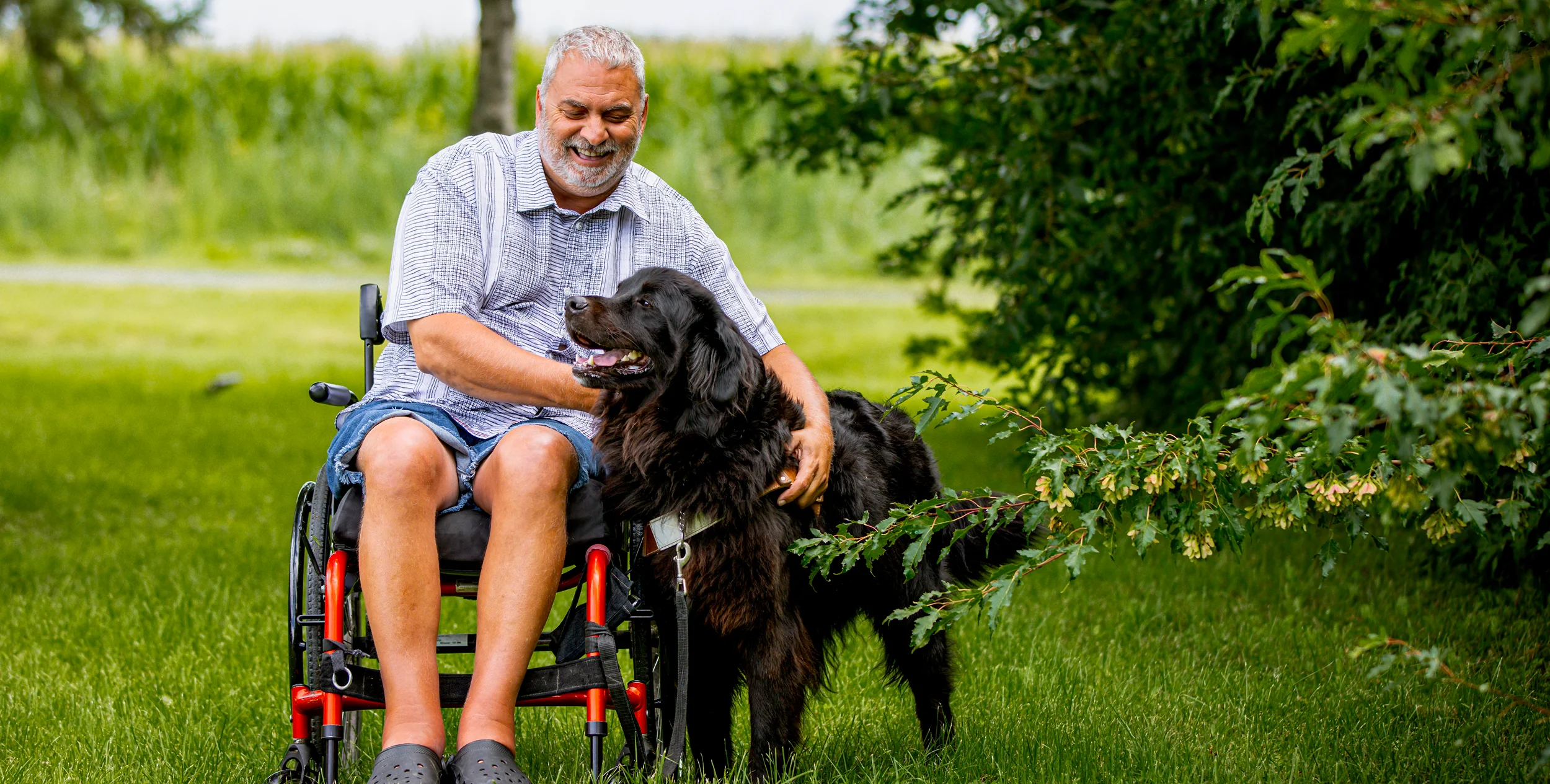
The mobility service dog program is intended for people with a physical disability.
The dog is specially trained to perform a variety of tasks that make daily life easier:
Provide support or balance assistance;
Pick up objects from the floor;
Assist with undressing;
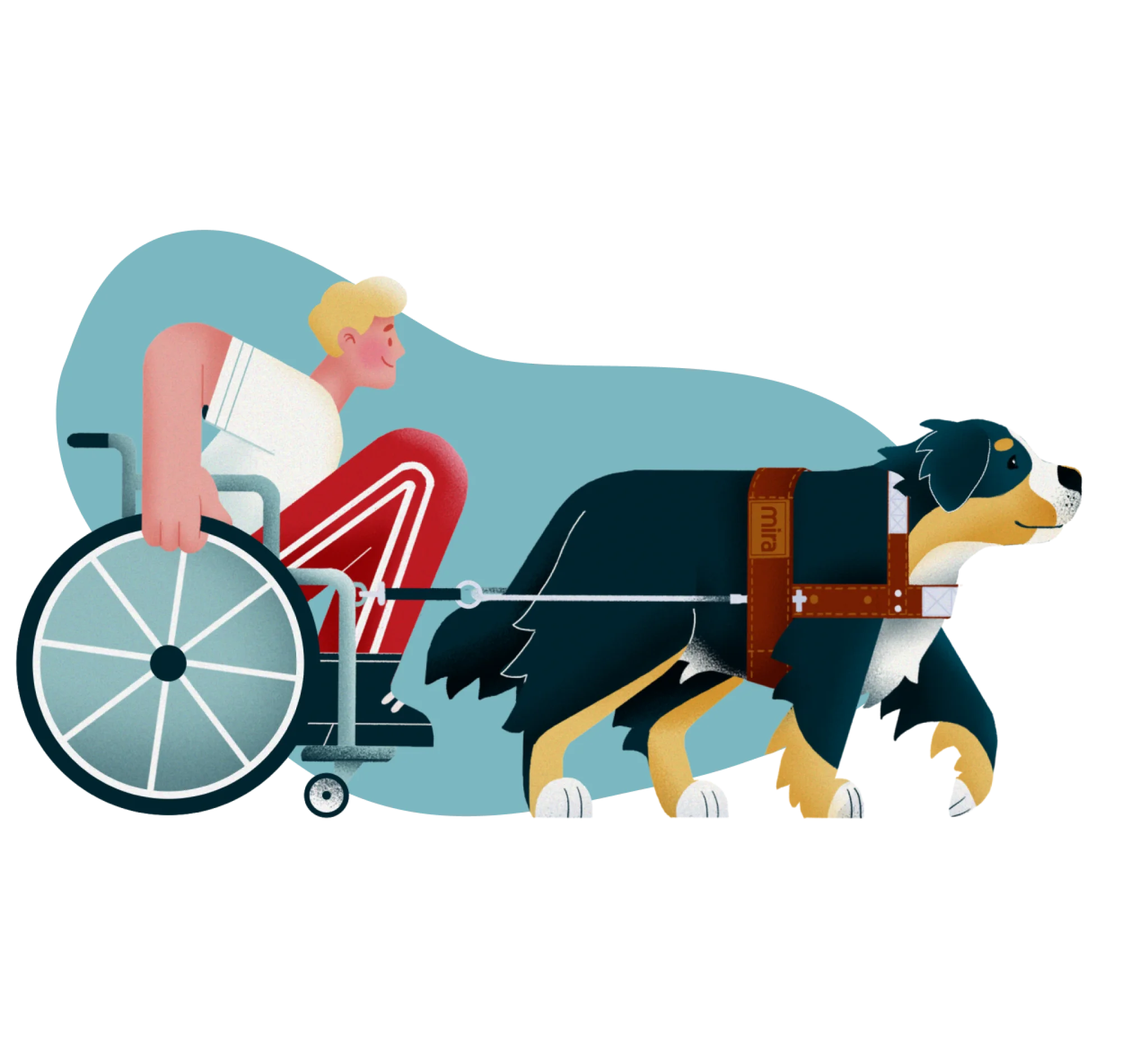
Pull a wheelchair;
Open doors by activating a button.
Eligibility criteria
To be eligible for the mobility service dog program, the applicant must:
Have at least one motor impairment causing significant mobility limitations, while maintaining sufficient physical strength to independently control their assistance dog;
Be able to communicate verbally so that the dog can quickly and clearly understand the commands;
Be able to participate in a three (3) week placement class at Mira, five days per week (8:30 a.m. – 4:30 p.m.) plus Saturday mornings;
Be able to maintain sustained attention throughout the class in order to memorize all commands and exercises;
Not have allergies that would interfere with working with the dog;
Be able to assume all responsibilities for the dog’s care (veterinary fees, maintenance, daily physical activity, etc.)*;
Have their weight considered in the eligibility assessment in relation to physical capabilities, as beyond certain weight and strength limits, using a mobility assistance dog may not be safe for the person or the animal;
Be autonomous in indoor and outdoor mobility (without human assistance) and go outside 3 to 4 times per day.
*Government subsidies may be available for individuals benefiting from a mobility service dog.
Program process
The process begins with the submission of an application accompanied by the required medical report.
The clinical team evaluates each case to ensure that the program is well suited to the needs of the person making the request.
Eligible individuals are invited to an evaluation lasting approximately half a day, conducted with a social counselor, an instructor, and an occupational or physical therapist, to assess their specific abilities and needs.
The file is then analyzed by the multidisciplinary clinical committee which confirms the person's eligibility for the program.
Once accepted, the individual will be invited to participate in a three-week class at Mira, with a maximum of eight participants per class.
Supervised by a team of professionals, including an instructor, a social counselor, and an occupational or physical therapist, the training is designed to develop a smooth and safe collaboration between the beneficiary and their dog.
Mira provides free accommodation and meals for the entire duration of the stay. If required, the beneficiary’s companion will also be accommodated to support them in their daily life.
Note: Mira does not perform pre-matching or home-based assignments.
Once the assignment class is completed, an instructor visits the participant’s home in the following days to ensure a safe and smooth integration of the duo into their daily environment.
Regular follow-up appointments ensure the well-being of the dog and the effectiveness of the team. One-off interventions can also be offered as needed.
The retirement age of a guide dog varies, but it typically occurs around 10 years old, depending on several factors. Mira provides support during this stage.
Generally, the dog is first offered to a member of the beneficiary’s close circle. If that is not possible, it is offered to its original foster family, and as a last resort, to a new loving family from the general public.
If the beneficiary’s needs continue, a new evaluation is conducted to determine eligibility for a subsequent pairing.
Commitments and responsibilities of the beneficiary
Adopting a service dog means committing to care for it with respect and consistency.
This includes:
Annual veterinary care and keeping its vaccination record up to date;
A balanced diet and adequate rest;
Compliance with Mira’s annual follow-ups;
Playtime and physical exercise, essential for the dog’s well-being.
Our multidisciplinary team of qualified professionals
Behind every successful team is a dedicated staff that ensures the program’s success and the well-being of each human–dog pair.
Instructor: Trains the dogs and ensures the pairing with the beneficiary, and develops the duo’s skills.
Social Counselor: Typically trained in psychoeducation, the social counselor accompanies beneficiaries throughout the process, supporting emotional and relational adaptation with the dog.
Orientation and Mobility Specialist (OMS): Prepares and guides future guide-dog beneficiaries during evaluations and pairing classes, teaching essential strategies and techniques for safe and independent mobility in various environments. They also act as a resource for both beneficiaries and their OMS specialists in the community, collaborating closely with instructors to ensure the team’s comfort, safety, and efficiency.
Clinical Advisor: Supports social counselors and instructors by helping analyze sensitive situations and make careful decisions regarding the well-being of human–dog teams. They provide a clinical perspective to promote ethical interventions and ensure the quality and fairness of the guide and assistance dog programs.
Apply now
Due to the high volume of requests, and in order to ethically serve those on the waiting list within a reasonable timeframe while ensuring optimal service for active participants and those awaiting a renewal, this program is not currently accepting new applications. There is no need to contact us, as any updates regarding the reopening of the program will be posted on this page.
Representative of the beneficiaries
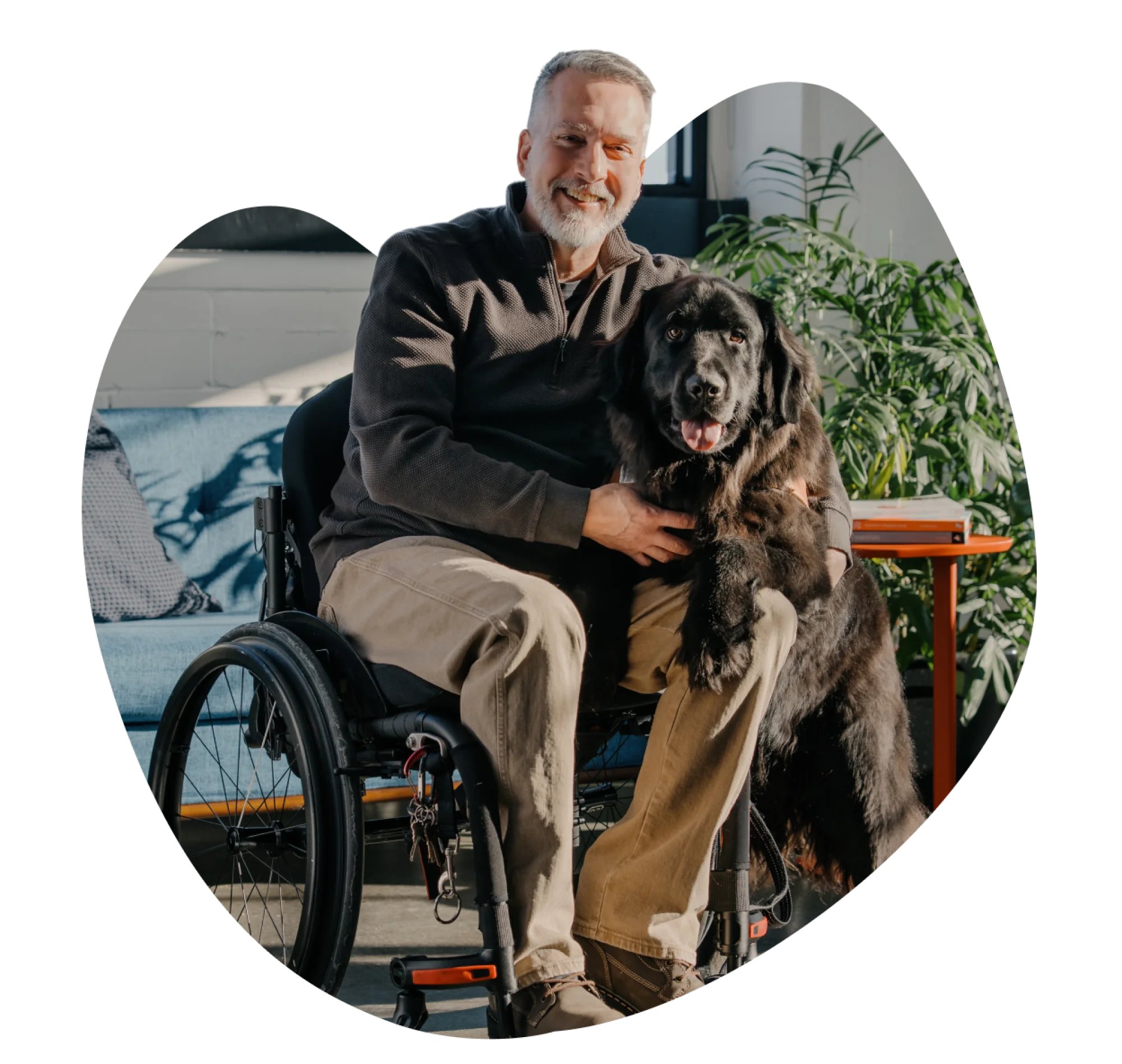
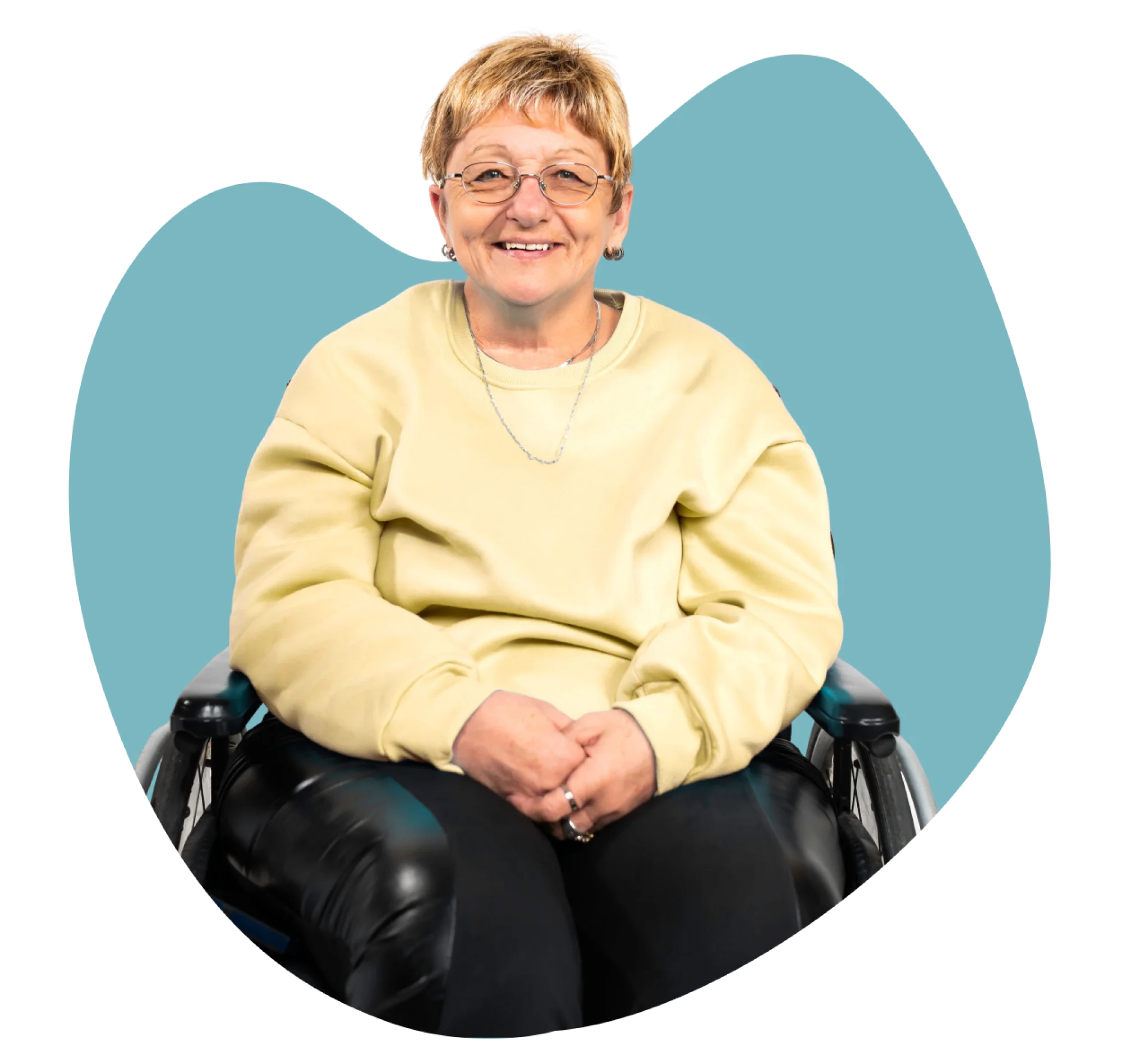
As the representative of the mobility service program beneficiaries, Linda serves as the spokesperson for users with Mira. She is available to answer questions, listen to concerns, and receive complaints, providing attentive support and ensuring that each situation is clearly understood. She then conveys this information to the Beneficiaries’ Committee, which communicates it to the Board of Directors so that the voices of program users are heard and contribute to the continuous improvement of the services.
"The Mira Foundation changed my life. I also enjoy sharing my experience with other beneficiaries."
- Linda McSween
Mobility service dog beneficiary
Testimony